

It’s a warm summer night. I’m about to hop in the car with my cousin, who’s dropping me off after a downtown mixer where we’d met up with some friends.
“I’m about to get in a vibe,” he says, sliding into the driver’s seat. I laugh, following his lead. “I’m about to play some real R&B on the ride back. Maybe even some slow-jams. Don’t judge.”
“Why would I judge?” I laugh. “I love me some good R&B.”
As we pull off, the bass hums low, and the playlist starts: D’Angelo, D’Angelo, D’Angelo. I glance out the window, half-listening, half-floating somewhere in memory—back to my dad, a lifelong music enthusiast who used to be involved in the industry when he was younger. He played D’Angelo’s records when I was little, before I even knew what I was hearing.
Michael Eugene Archer, better known by his stage name D’Angelo, wasn’t just a singer—he was one of the architects of an entire sound. Alongside India.Arie, Erykah Badu, Maxwell, Lauryn Hill, and others, his music shaped what came next. With his untimely passing on October 14, 2025 at just 51-years-old, music lovers, culture devotees, and curious ears alike can pause and reflect on the legacy he left behind, and the gifts he gave us.
Brown Sugar
His music didn’t demand your attention—it seduced it, pulling you into grooves that felt alive. From the start, D’Angelo made space for imperfection, for emotion, for truth. His debut, Brown Sugar (July 3, 1995), stunned listeners and defined a generation. The album debuted at number six on the Billboard Top R&B Albums chart, selling over 300,000 copies within two months, and spent 65 weeks on the Billboard 200 before going platinum. With singles like “Brown Sugar,” “Lady,” and “Cruisin’,” the songs blended earnest lyrics about love and romance with a fusion of contemporary R&B and traditional soul, layered with elements of funk, quiet storm, and hip-hop. The record’s success not only earned four Grammy nominations but also birthed the term neo-soul itself—coined by his manager, Kedar Massenburg—making Brown Sugar the movement’s cornerstone.
Voodoo
After two years of touring, writer’s block hit hard for D’Angelo, but the birth of his son with fellow R&B artist Angie Stone, who passed away earlier this year, reignited his creativity. Five years later came Voodoo (January 25, 2000), a record that deepened D’Angelo’s artistry and simultaneously redefined modern soul. The album explored themes of spirituality, love, sexuality, and fatherhood, wrapped in loose, groove-driven funk that feels both spontaneous and deliberate. It debuted at number one on the Billboard 200, selling 320,000 copies in its first week and earning near-universal acclaim. With singles like “Send It On,” “Devil’s Pie,” and the hit “Untitled (How Does It Feel)” with its iconic accompanied music video (above), Voodoo embodied everything D’Angelo had become known for: intimacy, depth, and a kind of raw sensuality that made time stand still.
Black Messiah
Then came the silence—fourteen years of it—until Black Messiah (December 15, 2014) arrived like a long exhale. Produced and written mostly by D’Angelo, alongside Questlove, Pino Palladino, Isaiah Sharkey, Roy Hargrove, and Kendra Foster, the album traded gloss for grit, embracing an entirely analog, murky funk sound reminiscent of Sly & the Family Stone’s There’s a Riot Goin’ On. Its songs carried the weight of both personal reflection and political urgency, blurring the line between protest and praise. Black Messiah debuted at number five on the Billboard 200 and number one on the R&B/Hip-Hop Albums chart, selling over 117,000 units in its first week. The project reaffirmed D’Angelo’s mastery of his craft—every instrument, every note, every silence intentionally placed. It cemented his legacy as both perfectionist and prophet, a modern heir to Prince’s creative autonomy and a reminder that soul, at its core, is about presence, not polish.
The Legacy Lives On
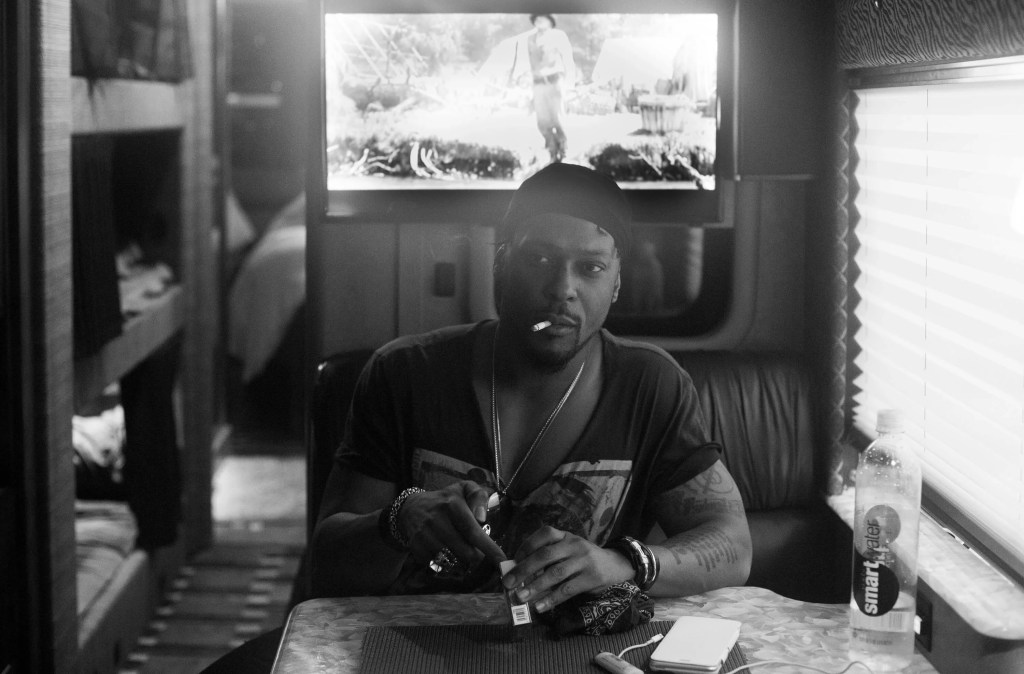
Even now, his influence lingers in the fabric of modern R&B. You can hear it in the lush harmonies of Lucky Daye, the vulnerable storytelling of SZA, and the smooth, meditative cool of Brent Faiyaz. Artists like Anderson .Paak, H.E.R., and Victoria Monét all pull from the same lineage—music that breathes, that bends genre, that prioritizes feeling over perfection. D’Angelo helped shape that language. His sound carved out space for emotion to live in its purest form: messy, sensual, spiritual, and real. He didn’t just make music for his time—he made it for ours, too. Before his passing, he had reportedly been working on a new album with longtime collaborator Raphael Saadiq—proof that even until the end, D’Angelo was still creating, still evolving, still pouring soul into sound.
The car slows to a stop in front of my house and my cousin turns down the music. The air feels softer, like the night’s been humming in tune with every note we played. I turn to my cousin and smile.
“I love all the D’Angelo in there,” I say.
He grins. “Had to throw him in the mix. You can’t have true R&B without him.”
I nod, smiling.
He pauses. “Crazy to think he’s gone.”
“Yeah,” I say softly. “But his legacy definitely lives on.”
He nods again, a small smile tugging at his face.
“Get home safe!” I call as I hop out.
He flashes the “OK” sign, turns the volume up, and drives off—D’Angelo still playing, fading into the night like the music never stopped.
 Alena Nicole
Leave a comment