

It’s an early fall morning. The air is crisp, but the sun is shining in through the car window, warming my face. My dad is driving, my mom’s in the passenger seat, and my brother and I are in the back — I’m on aux, as per usual.
“Do you know where this sample comes from?” my dad asks, turning the music down just enough to quiz me. He always knows immediately which original track hides beneath the current ones, like he’s got a little music encyclopedia in his head.
“I can’t place it!” I say, already typing furiously on my phone, determined to solve it before he does. “It’s going to bug me so much!”
Mom laughs, my dad gives his I already know the answer smirk, my brother rolls his eyes and smiles, and we fall right back into the melody of the song. Conversations like this are normal for my family—discussing samples, sound, the bones of a song, who influenced who, which version was better… For us, it was never just background noise; it was language. It was how we bonded, how we passed time, and how we learned each other.
My Introduction to Music
Music has always been stitched into my everyday life like that — in the car, in the kitchen, in random conversations that start one way and end with us debating a chord progression. It’s the atmosphere I grew up in, the first thing that ever made sense to me, and the thing I can’t seem to separate from my identity, no matter how old I get.
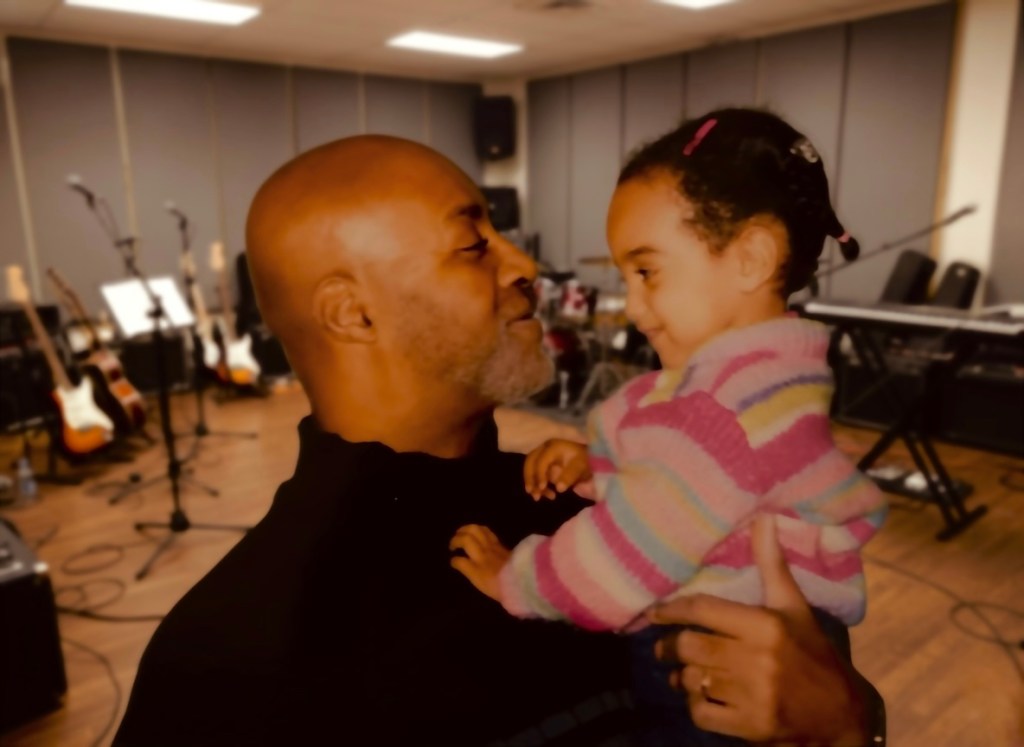
That makes sense, though. I grew up surrounded by R&B — in the studio where my sister’s girl group used to practice harmonies until midnight, backstage at rehearsals for local shows, in mirrored dance studios dancing along to their routines. Growing up, my dad was in the industry, so I was constantly around musicians, producers, and giant speakers taller than me. And when I say “constantly,” I mean I was three years old, handing out CDs on the street because I was cute enough to boost sales. And honestly, it rubbed off on me way too early — I spent elementary through middle school trying to form little singing groups at recess, holding “auditions” like I had a whole label to run.
And on my mom’s side, it was the same story — just a different flavor. My grandfather was a singer his whole life. He grew up in a music group with his three brothers, and even when I was little, he was constantly singing around the house, teaching me how to match notes and control my voice. A lot of my earliest memories with him are just… music. Him singing jazz chords, me trying to copy him, laughing when I got it wrong, and then him showing me how to find the right note.
All of it kind of blended — the late rehearsal nights, me sitting on high stools in dim studios watching my teenage sister (who I swore was the coolest person alive) and her friends record vocals, the live shows I’d tag along to, my grandfather humming jazz chords and whistling around the house, and me dancing in my grandma’s living room to ’70s music like it was my own little stage… and somewhere in the middle of all that noise and harmony, R&B became the sound that stuck.
R&B and My Writing Voice
As I got older, I realized R&B didn’t just shape my taste — it shaped the other thing that thrives through my existence: my writing voice. The genre taught me how to pay attention to emotion, detail, and tone long before I ever sat down to write anything “serious.” R&B is storytelling through feeling, through intention, through the little inflections that say more than the words themselves. I learned to write with the same instincts I used while listening — following the emotional beat, not just the literal one — first in journals, then in stories, then in essays, and eventually in music pieces. That rhythm followed me everywhere.
I didn’t grow up studying craft books or creative writing guides. I grew up studying bridges and ad-libs, the way singers let their voices crack on purpose, how harmonies sit underneath the main melody like a secret weapon. Some of my earliest ideas of production and arrangement came from listening to the album my dad co-produced, Out of the Hart by O.T.H. — hearing those songs on repeat taught me more about structure and feeling than any writing class ever could. R&B was my first writing teacher before I ever heard a single “how to write” tip or attended any English class. Writing music journalism felt like the most natural extension of that passion. Interviewing artists, reviewing albums, breaking down creative choices — it all clicked because I already understood the emotional architecture behind the music. Writing about music didn’t feel like learning something new; it felt like coming back to something I’d always known. I wrote the way R&B taught me to listen: closely, honestly, and with intention.
How I Use Music to Cope
The older I get, the more I realize I don’t just listen to music — I use it. Music is how I navigate emotions I don’t have the language for yet. It’s how I regulate myself when I’m anxious, how I ground myself when I’m overwhelmed, and how I hold space for feelings I’d rather not admit out loud. And even though I listen to everything — trap, pop, alt, rap — I always end up drifting back to R&B when I need something steady to hold onto. It’s the genre that feels like a hug, like someone saying “I get it” without me having to explain anything.
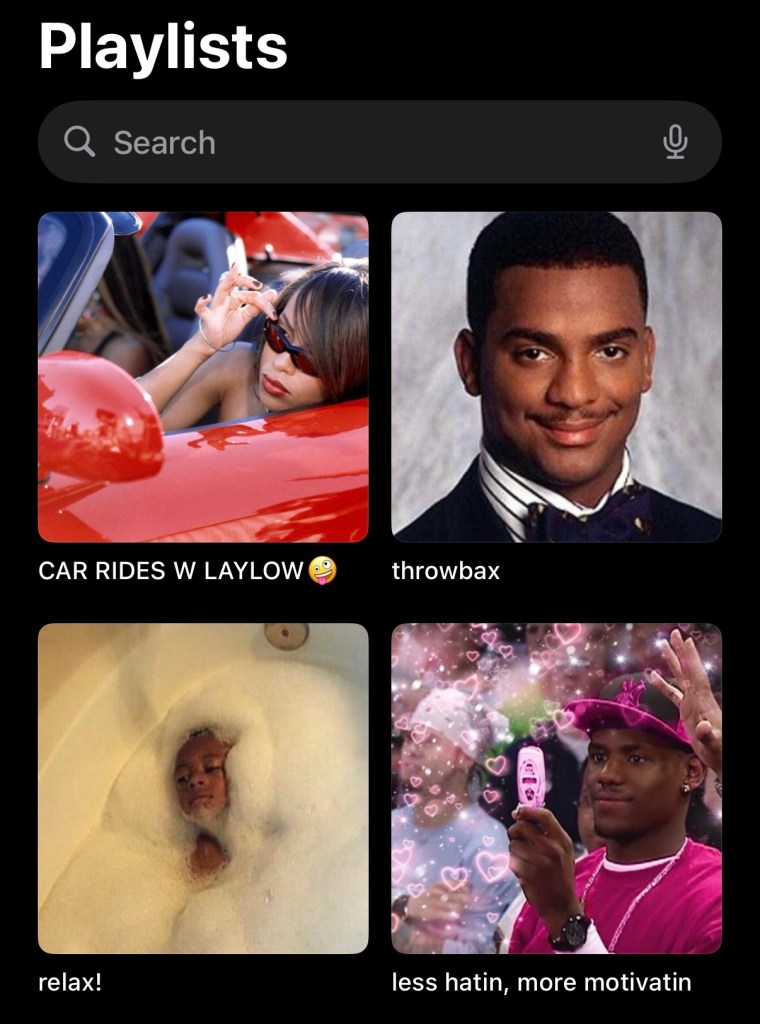
I’ve been making playlists since the iPod Nano era, and looking back, I can literally trace different versions of myself through them. The spontaneous, windows-down mixes I made for long drives. The nostalgic ones are filled with childhood songs that immediately bring me back to dancing in my bedroom. The high-energy ones that pull me out of a slump. The soft, slow ones I use when I need to breathe and reset. Each playlist became its own emotional ecosystem — a place to land when I didn’t know how to navigate what I was feeling in real life. Some hyped me up, some calmed me down, and some just let me fall apart safely.
What I love most is how R&B almost always finds its way into the center of it. Not every playlist is R&B-focused, but that warmth, that honesty, that emotional clarity slips in every time. It’s my grounding point; the genre that can slow my heart rate, clear my mind, or remind me of who I am when everything else feels loud. R&B has always been my soft place to land. It’s therapy with better sound design, and it’s what keeps me balanced.
Music, Culture, and My Identity
When I reflect on my identity, I think about the thread of music that runs through every part of my life. R&B, especially, feels like culture, memory, and community all braided together. It’s a genre that carries history in its harmonies and truth in its storytelling — the kind of emotional honesty you hear in Lauryn Hill’s raw delivery or the warmth of Charlie Wilson’s vocals. It’s rooted in generations of Black creativity, resilience, softness, and expression, and growing up around that shaped me in ways I didn’t fully recognize until I got older.
R&B taught me emotional literacy before I even knew what that term meant. It taught me confidence before I understood where confidence came from. It was my first blueprint for vulnerability, strength, and connecting my thoughts with my feelings, long before I could articulate why a song like “Little Things” by India.Arie hit so deep, or why 112’s harmonies could instantly lift my mood. And it anchored me to my family’s legacy — the sounds and traditions that shaped the way we listened, created, and moved through the world.
When I hear R&B, it feels like home. Not a location, but a lineage. A sound passed down, reshaped, and carried forward through each generation in its own way. And that’s why the genre is so tied to my identity: it’s not just something I love; it’s the foundation I grew up on.
It Will Always Be R&B
Music has always been more than noise in the background of my life — it’s the framework I use to understand who I am and where I come from. R&B shaped the earliest parts of my identity, but it also taught me how to navigate the world: how to sit with emotions, how to tell the truth, and how to hold softness and strength simultaneously. It’s been with me through every transition, every move, every version of myself I’ve had to grow into or out of. And the older I get, the more I realize I’m not just listening to music — I’m carrying forward a lineage, a history, a sound that raised me. That’s why it still matters. That’s why it still finds me. And that’s why, no matter how much life changes, I know this part of me never will.
 Alena Nicole
Leave a comment